
Deep Cleaning Removed Built-Up Dirt From This Kitchen Tile Floor

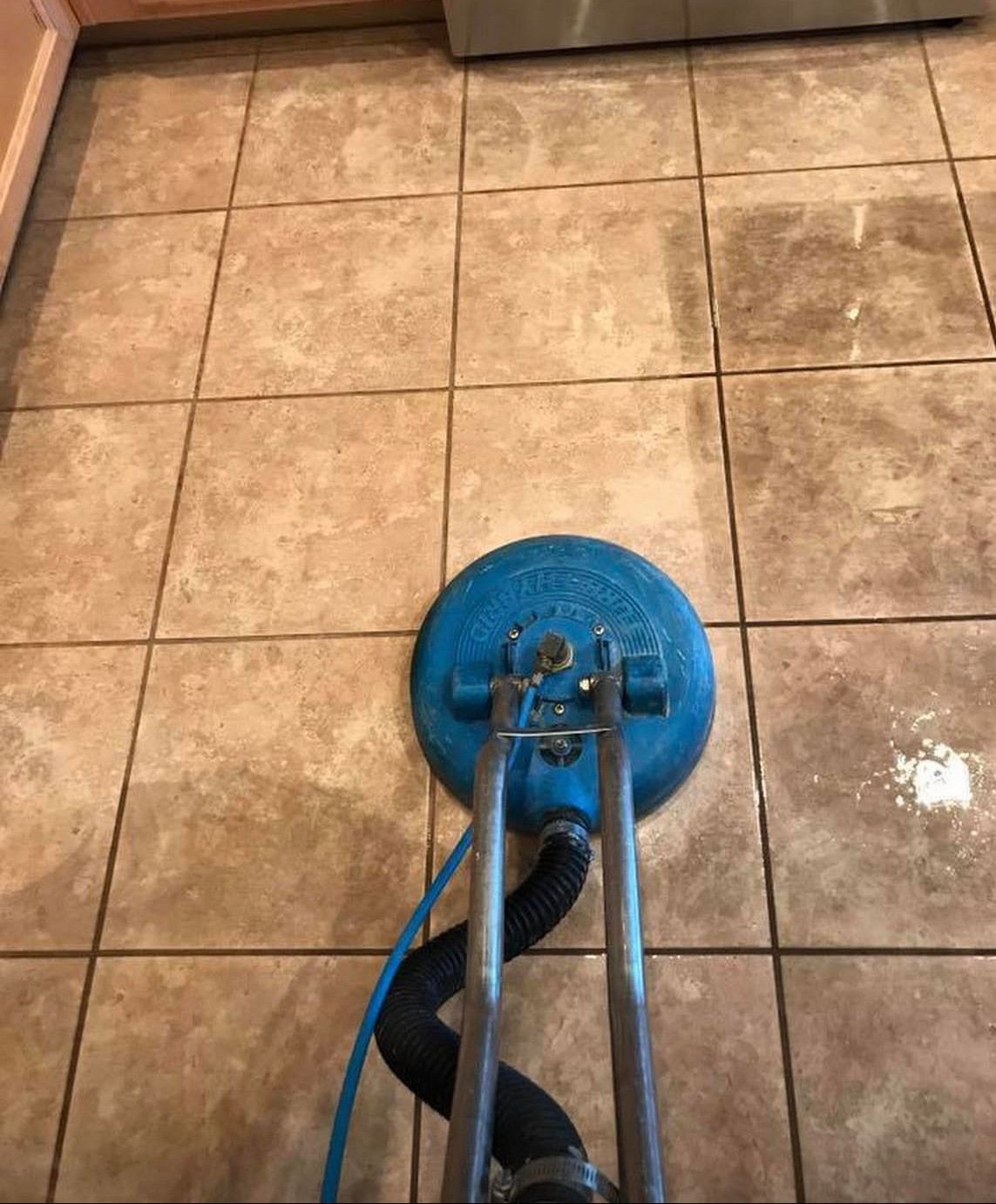
Kitchen floors deal with more than ordinary foot traffic. Cooking grease, food spills, tracked-in dirt, and everyday cleaning residue can gradually build up on tile and inside grout lines. On a recent kitchen tile and grout cleaning project for Platinum Carpet Cleaning, we focused on removing accumulated soil that regular household cleaning often leaves behind. The result was a noticeably cleaner floor without replacing the existing tile or grout.
For homeowners throughout San Jose, Cupertino, and surrounding communities, professional tile and grout cleaning can make a substantial difference when mopping and scrubbing no longer produce the results they used to.
How Do Professionals Clean Kitchen Tile and Grout?
Professional kitchen tile and grout cleaning involves identifying the flooring material, applying an appropriate cleaning solution, loosening embedded dirt through agitation, and removing contamination with professional rinsing and extraction equipment. This process targets grease, soil, and residue trapped in grout joints and textured tile surfaces that ordinary mopping often cannot reach.
The exact cleaning method depends on the tile material, grout condition, and type of contamination present.
Ceramic and porcelain tiles generally tolerate different cleaning methods than natural stone. Some floors also have existing sealers or coatings that require special consideration.
For this kitchen project, our goal was to remove built-up contamination from the tile and grout while preserving the existing flooring.
Why Does Kitchen Tile and Grout Develop So Much Buildup?
Kitchen floors are exposed to several types of contamination that don't always respond to ordinary household cleaners.
Cooking oils are one of the biggest contributors. Small amounts of airborne grease can settle onto nearby surfaces, including the floor. Over time, that oily residue can combine with dust and dirt to create a stubborn film.
Food preparation also introduces spills, crumbs, and moisture. Even when spills are cleaned promptly, small amounts of residue can remain in textured tile surfaces and recessed grout joints.
Foot traffic adds another layer of contamination.
Shoes carry fine particles of sand, dust, and outdoor soil into the kitchen. As people walk across the floor, those particles become concentrated in frequently used areas, particularly near sinks, refrigerators, and cooking surfaces.
Traditional cement-based grout is especially vulnerable because it contains tiny pores that can absorb moisture and certain contaminants.
As dirt accumulates, grout lines may become noticeably darker than the surrounding tile.
Professional cleaning helps remove this buildup rather than simply spreading it around the floor.
Why Doesn't Regular Mopping Remove Embedded Grout Dirt?
Mopping is an important part of routine floor maintenance, but it doesn't always reach the contamination trapped inside grout.
Most mops glide across the upper surface of the tile. Grout joints are often slightly recessed, which means the mop may not make enough contact to loosen dirt embedded in their textured surface.
Dirty mop water can also contribute to discoloration.
When the same cleaning solution is used across an entire kitchen floor, it gradually collects soil. Some of that contaminated water can settle into the grout joints, leaving residue behind as the moisture evaporates.
Using too much detergent creates another problem. Cleaning products that aren't properly diluted or rinsed away can leave a sticky film that attracts additional dirt.
This can make a floor appear dirty again shortly after mopping.
For homeowners who repeatedly scrub the same grout lines without seeing much improvement, the issue may be embedded contamination rather than a lack of effort.
Professional cleaning uses equipment and techniques designed to loosen and remove that contamination more effectively.
What Happens During Professional Tile and Grout Cleaning?
The first step is evaluating the floor.
Before choosing a cleaning solution, we need to consider whether the tile is ceramic, porcelain, or natural stone. We also look at the condition of the grout and any existing sealers or coatings.
This helps determine which cleaning products and techniques are appropriate.
Next, a compatible cleaning solution is applied to help break down grease, oils, and accumulated soil.
Some contamination requires additional agitation to loosen it from textured surfaces and grout joints. The amount of agitation depends on the flooring material and its condition.
Once the soil has been loosened, professional rinsing and extraction equipment removes the dirty solution from the floor.
This is one of the biggest differences between professional cleaning and household mopping.
Instead of repeatedly moving dirty water across the tile, extraction equipment helps recover the loosened contamination.
For this recent kitchen floor project, the cleaning process removed accumulated dirt and improved the overall appearance of the tile and grout.
The finished floor looked cleaner and more consistent, particularly in areas where buildup had affected the appearance of the grout lines.
Can Professional Cleaning Restore the Original Grout Color?
Professional cleaning can often restore much of the original grout appearance when discoloration is caused by removable dirt, grease, and cleaning residue.
However, not every dark grout line is dirty.
Grout can also become permanently discolored from certain chemicals, dyes, moisture conditions, or previous cleaning treatments.
The grout's original color and age matter as well. Some floors develop uneven coloration during installation, while others have areas that were repaired with a slightly different grout mixture.
Cleaning removes contamination, but it doesn't change the underlying color of the grout itself.
If the grout is structurally sound but permanently stained, grout color sealing may be another option.
Color sealing involves applying a specialized pigmented coating to properly prepared grout lines. This can create a more uniform appearance while adding protection against certain future stains.
For many kitchen floors, professional cleaning is the best first step because it reveals how much of the discoloration is removable before considering additional treatments.
Should Kitchen Grout Be Sealed After Professional Cleaning?
Sealing can help protect certain grout materials from absorbing future spills and contaminants, but it isn't necessary for every floor.
Traditional cement-based grout is porous. A compatible penetrating sealer can help reduce how quickly moisture, oils, and other substances enter the grout.
This can make routine cleaning easier and provide more time to clean up spills before they cause staining.
However, grout sealing doesn't make a floor completely stain-proof.
Grease, dirt, and cleaning residue can still accumulate on the surface, especially in a busy kitchen.
Some modern grout formulations are designed to resist staining without additional sealing. Existing coatings and the surrounding tile material may also influence whether a sealer is appropriate.
The grout should be thoroughly cleaned and allowed to dry according to the sealer manufacturer's requirements before sealing.
Applying sealer over dirty or damp grout can interfere with performance and may trap unwanted residue.
Professional cleaning provides a good opportunity to evaluate whether the grout needs additional protection.
How Often Should Kitchen Tile and Grout Be Professionally Cleaned?
For many households, professional tile and grout cleaning every 12 to 18 months is a reasonable starting point.
However, the ideal frequency depends on how the kitchen is used.
Homes with children, pets, frequent cooking, or heavy foot traffic may need cleaning more often. A lightly used kitchen with properly maintained grout may go longer between services.
The type of tile and grout also matters.
Textured tile can hold more soil than a smooth glazed surface. Unsealed cement-based grout may absorb contamination more readily than certain stain-resistant grout formulations.
Rather than relying on a strict schedule, homeowners can watch for signs that routine cleaning is no longer effective.
Darkening grout lines, persistent sticky residue, uneven traffic patterns, and discoloration that remains after mopping are all reasons to consider professional cleaning.
Addressing buildup before it becomes severe can also make ongoing maintenance easier.
How Can You Keep Kitchen Tile and Grout Cleaner Between Services?
Regular maintenance makes a noticeable difference in how long kitchen floors stay clean after professional service.
Start by removing loose dirt frequently. Sweeping or vacuuming prevents sand and grit from being ground into the tile and grout during everyday foot traffic.
When mopping, use a cleaning product that's compatible with the flooring material.
For many ceramic and porcelain floors, a properly diluted neutral-pH cleaner is suitable for routine maintenance. Natural stone requires products specifically compatible with that material.
Change mop water regularly so you're not spreading accumulated dirt back across the floor.
Avoid using excessive detergent. More cleaning solution doesn't necessarily mean better cleaning, and leftover residue can attract additional soil.
Kitchen spills should be addressed promptly, particularly cooking oils and strongly colored liquids.
It's also worth avoiding harsh acidic cleaners on natural stone or surfaces where the product could damage grout or existing sealers.
These habits help reduce buildup and keep the floor looking cleaner between professional appointments.
Professional Cleaning Can Make an Older Kitchen Floor Look Better
Our recent kitchen tile and grout cleaning project showed how much accumulated dirt can affect the appearance of an otherwise serviceable floor.
The tile and grout didn't need to be replaced to achieve a noticeable improvement. Removing the built-up contamination helped restore a cleaner, more consistent appearance.
At Platinum Carpet Cleaning, we provide professional tile and grout cleaning for homeowners throughout San Jose, Cupertino, and surrounding communities.
If your kitchen floor has dark grout lines, stubborn residue, or areas that never seem to look clean after mopping, professional tile and grout cleaning may be the solution.
A thorough cleaning can remove contamination that ordinary household methods leave behind and make the floor easier to maintain moving forward.


Comments